


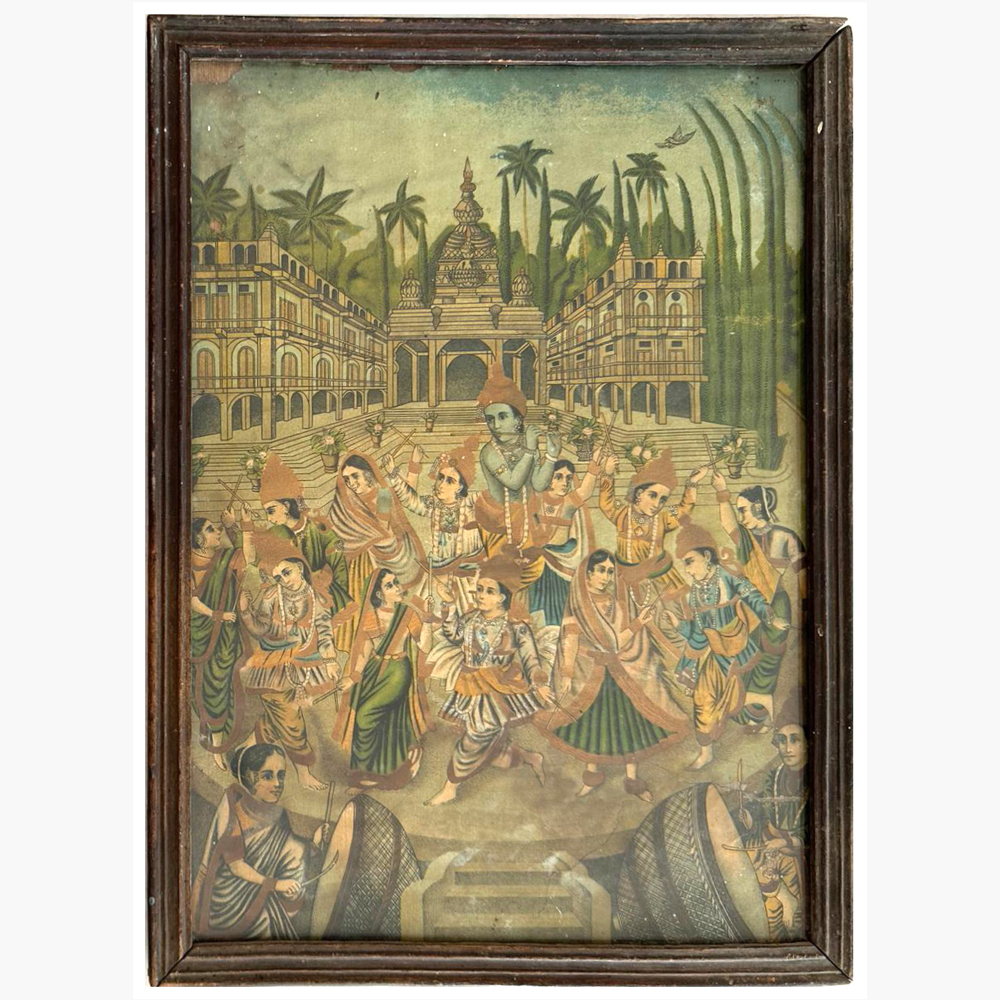
Kodanda Rama Oleograph by G V Venkatesh Rao (1927)
Kodandarama Mythological Devotional Artwork
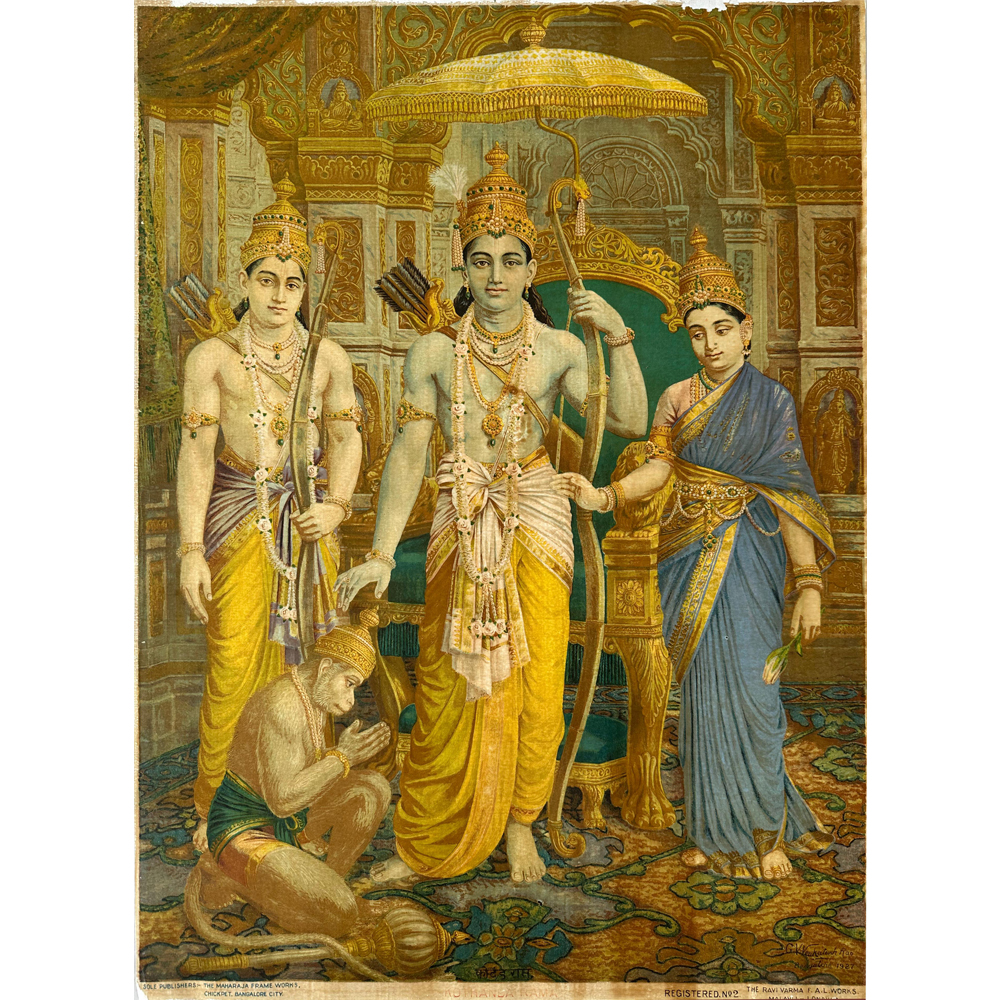
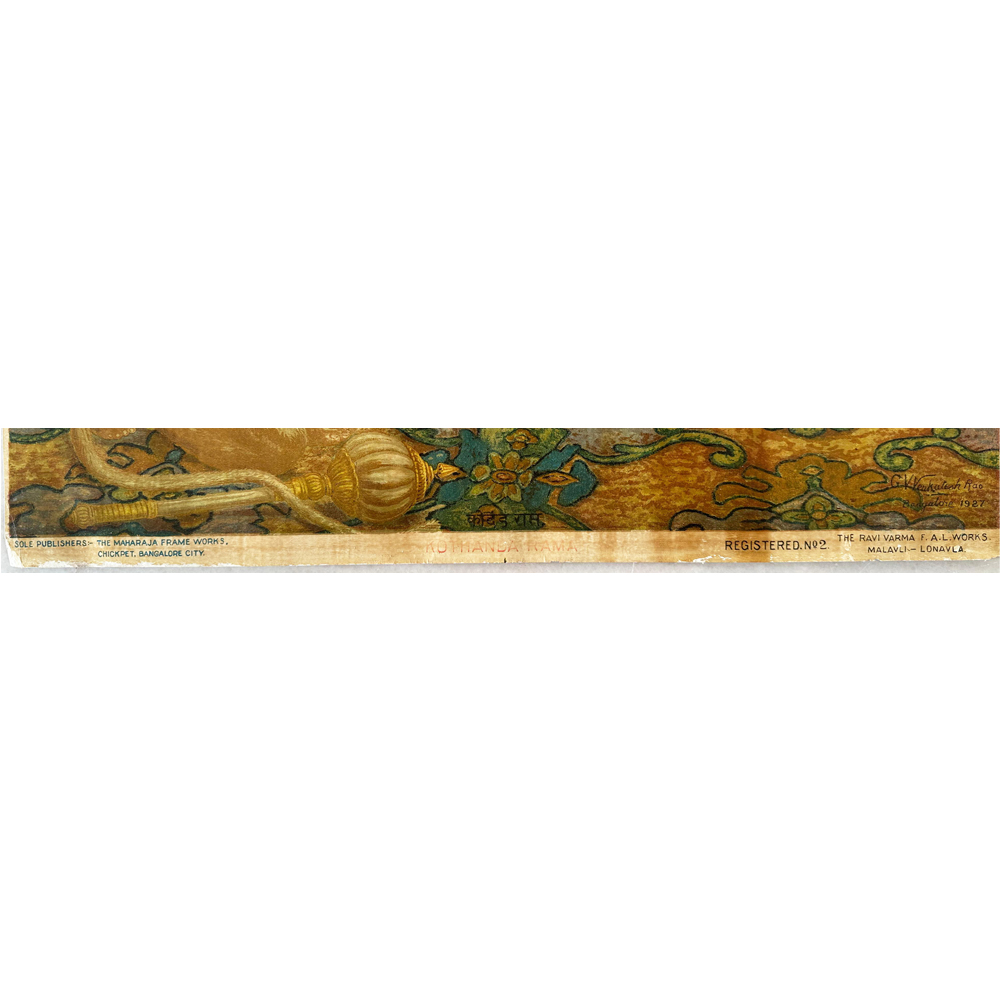
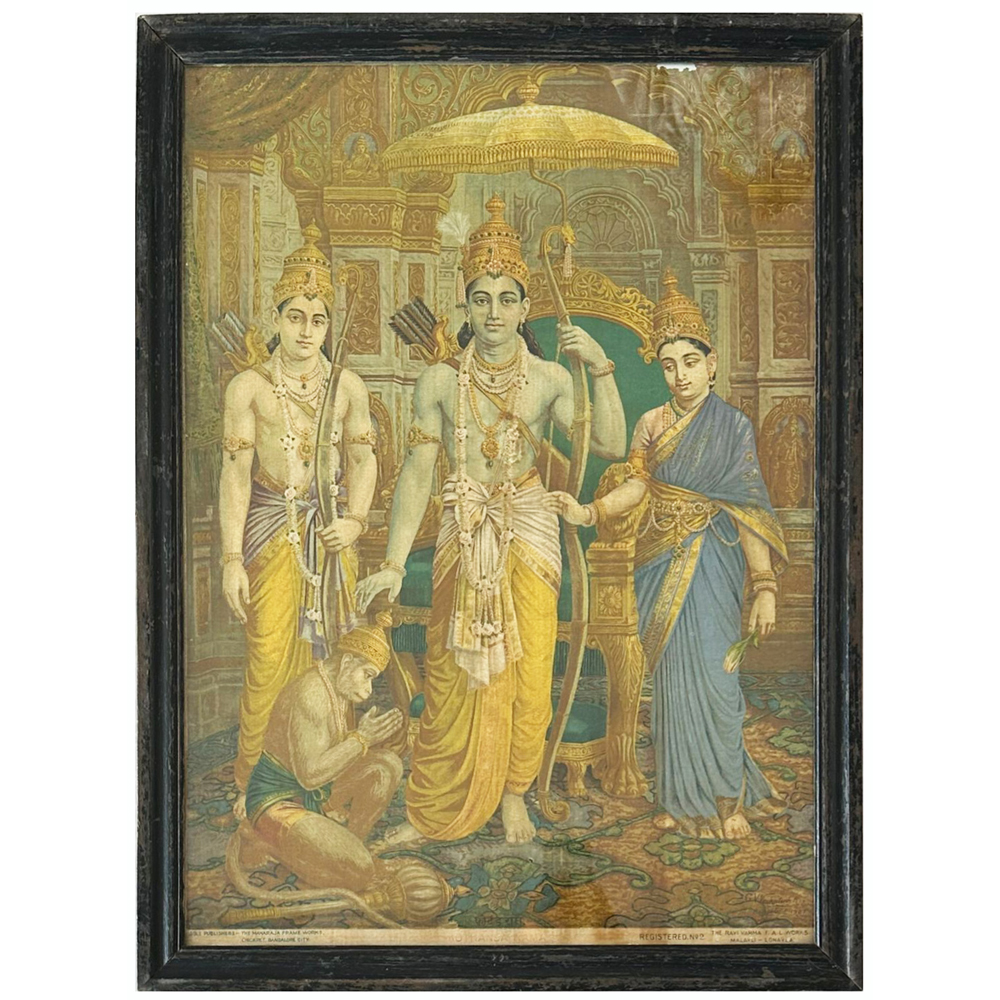
The Kodanda Rama oleograph (1927) by G. V. Venkatesh Rao is an important example of early twentieth-century Indian mythological art. Produced as a chromolithograph, this artwork reflects the artistic tradition of devotional prints that made sacred imagery accessible to households and temples across India during the early 1900s.
The artwork depicts Kodandarama, a revered form of Lord Rama, where the deity is shown holding his characteristic bow known as the Kodanda. This bow symbolizes righteousness, strength, and the divine duty of Rama to uphold dharma, the moral order of the universe. The posture of the deity conveys dignity, calm authority, and divine protection.
In many traditional compositions of Kodandarama, Lord Rama is accompanied by Goddess Sita, Lakshmana, and Hanuman, forming the sacred Ram Darbar arrangement. This grouping represents devotion, loyalty, and the triumph of good over evil as narrated in the epic Ramayana.
Artist G. V. Venkatesh Rao, known for his portrayals of Hindu deities during the early decades of the twentieth century, created this work using the oleograph printing technique, a multi-colour lithographic process designed to resemble oil paintings. The result is a richly detailed devotional image admired by collectors and devotees alike.
Collectors can purchase the Kodanda Rama oleograph (1927) by G. V. Venkatesh Rao from Beyond Square, a trusted destination for rare heritage prints and classical mythological artworks.







 No products in the cart.